HVAC lifts on Richmond rowhouse roofs
In the Fan, the Museum District, Church Hill and Jackson Ward, most HVAC lifts come down to one question: can the crane work from the alley, or does it have to sit in the street? The answer changes the permit, the crane size and the bill.
How much is a crane to set HVAC on a Richmond rowhouse roof?
A small crane with an operator lists at $180 an hour on one 2026 public rate sheet, so a 3-hour condenser set from the alley comes to about $540. If the crane sits in a city street or alley, add a Work in Streets permit, which charges $20 per crane per day on rubber tires, plus any lane closure fee.
- Whether the crane can work from the alley usually decides the setup and the size.
- Any crane in a Richmond street, alley or sidewalk needs a Work in Streets permit.
- In historic districts, a condenser seen from the street goes to the Commission of Architectural Review.
- Keep the boom at least 10 feet from lines up to 50 kV, and alleys are full of service drops.
Alley or street, then the crane
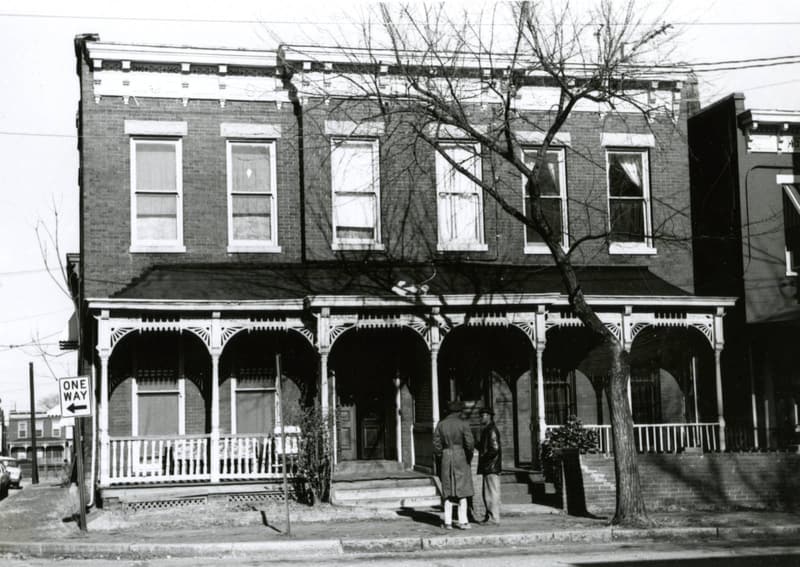
Richmond’s rowhouse blocks were built with service alleys behind them, and a lot of HVAC work depends on them. A boom truck or small crane parked in the alley can often reach a flat rear roof without blocking the front street at all. When the alley is too narrow, has a low wire across it or the unit has to go toward the front, the crane moves to the street.
- Rear roof, crane in the alley. A condenser or a small package unit on a two or three-story rowhouse: a small crane or a boom truck usually does it.
- Middle of a wide flat roof. A unit 40 to 70 feet from the edge on a school, church or converted warehouse in Scott’s Addition or Manchester: a larger crane with more boom.
- Downtown and Jackson Ward corners. Buildings tight to the sidewalk often put the crane in the street, with a lane closure.
Include the unit model, its spot on the roof, the alley width and a picture of the place you think the crane could stand.
The city permit for a crane in the street
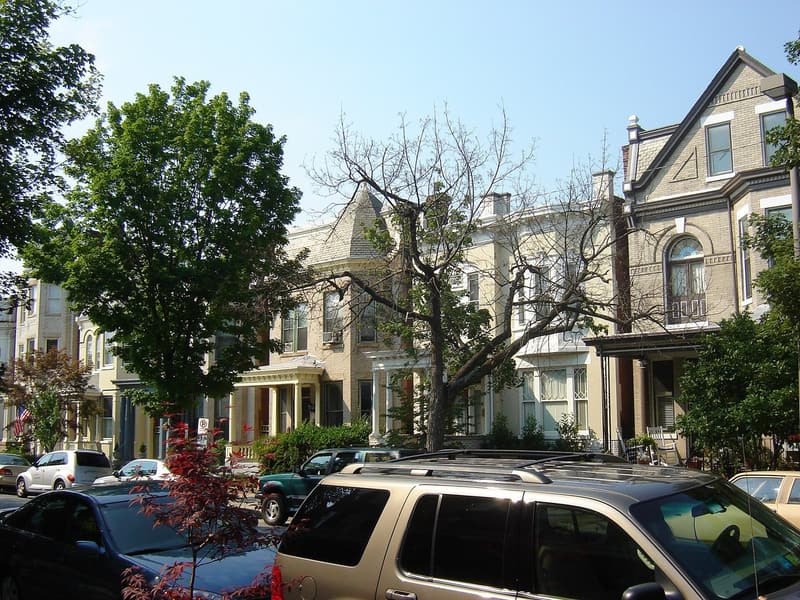
On private property the crane just sets up and lifts. Once it is in a city street, an alley or on a sidewalk, Richmond wants a Work in Streets permit first:
- The packet. A site plan, a maintenance of traffic plan and the contractor’s insurance certificate and license, filed at City Hall, Room 110, or by email.
- The crane fee. $20 per crane per day on rubber tires, $50 on tracks. Closing a lane is $15 a week per lane per block on a residential street and $30 on an arterial.
- Full closures. Closing the whole street adds a detour plan, a pedestrian plan and a memo, and a meeting with the right-of-way inspector before work starts.
The historic district rules for condensers
Much of the Fan, Church Hill, Jackson Ward and the other old and historic districts sit under the Commission of Architectural Review. Staff can sign off on a condenser that is screened from public view, or only slightly visible from the rear or an alley, placed as far from the front as possible. Equipment you can see from the street goes to the Commission for a Certificate of Appropriateness, which takes longer. Settle where the unit goes before booking the crane.



Wires and summer heat
Alleys carry the service drops for every house on the block. Under federal rules the boom has to stay 10 feet or more from lines up to 50 kV, with more room for higher voltage, so list each line in your notes. Richmond summers are hot and humid with afternoon storms, and the operator stops when lightning is close.
Typical HVAC bills
- Condenser from the alley: 3 hours of a 30-ton crane at $180 an hour comes to about $540.
- Package unit across a wide roof: a crane up to 100 tons with a rigger ran $750 an hour on a 2024 county bid, so 4 hours is about $3,000.
- Add-ons: the Work in Streets permit, a lane closure, a signal person and mats under the outriggers.
See the full rates page for how the public prices were built.
Other questions
Who applies for the Work in Streets permit?
Usually the crane company or the HVAC contractor, since the packet needs the contractor's insurance certificate and license along with the site plan and the traffic plan. The application goes to City Hall, Room 110, or by email.
Can the condenser go on the roof instead of the side yard?
Often, and on a narrow lot it is the usual answer. In the old and historic districts, staff can approve a unit that is screened or only seen from the rear or the alley. A unit visible from the street needs the Commission's review.
When is the best time to swap a unit?
April, May, September and October are the easy months. In a Richmond heat wave, crews start at first light and try to be off the roof by early afternoon, when the storms tend to build.
Richmond sources for this guide
- City of Richmond, right-of-way management and Work in Streets permit
- City of Richmond, CAR administrative approvals for HVAC
- OSHA 29 CFR 1926.1408, power line safety
- Port of Toledo (Oregon), 2026 shipyard rate sheet
Have a Richmond crane crew price it
Rough guesses work.
Keep reading
-
 Public crane price lists, read for Richmond
A Maryland county crane bid and a 2026 port yard rate, what they include, and the 4-hour bill they add up to.
-
 Taking a big tree off a Richmond house with a crane
Crane-assisted tree removal in Richmond: when a crane is the safe way, city trees and Urban Forestry permits, street setups and what the lift may cost.
-
 Cranes on Chesterfield County jobs
A crane in Chesterfield, Midlothian, Chester or Bon Air: VDOT roads and land use permits, the $100 permit fee, how Henrico differs and public crane rates.